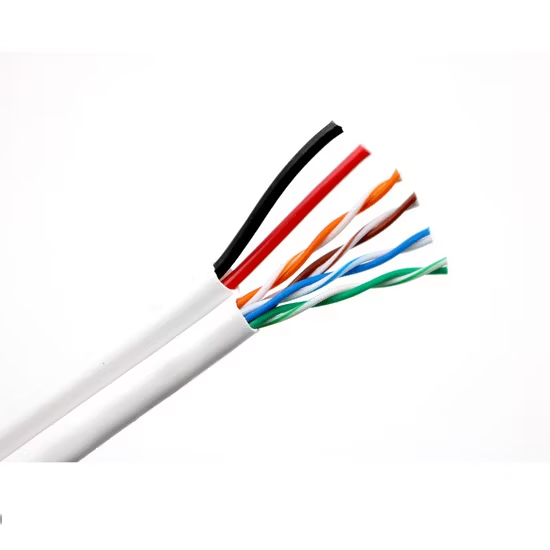
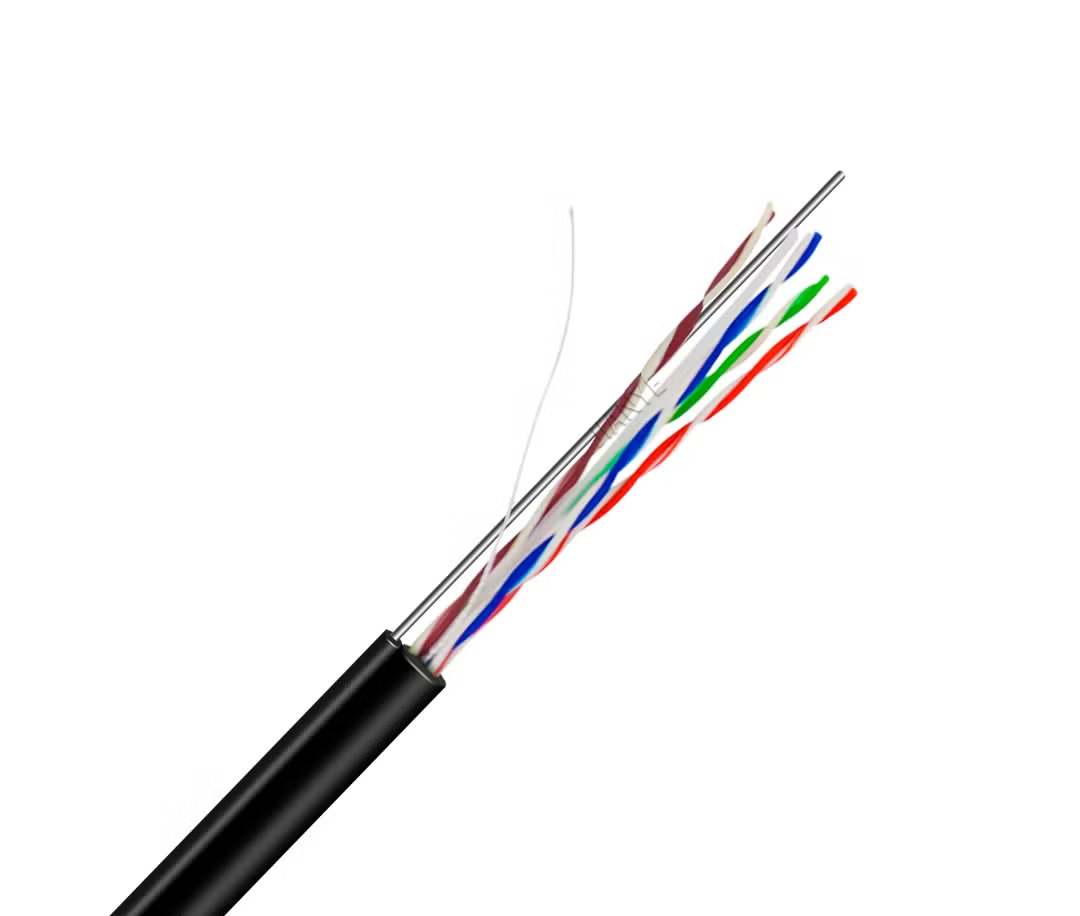
CCTV CABLE CAT5 & CAT 6
For CCTV installations, copper-based CAT 5 and CAT 6 cables are both widely used, with each offering specific advantages depending on application needs and performance requirements.
Key Features of Copper CAT 5 & CAT 6 Cables
-
Both CAT 5 and CAT 6 cables for CCTV applications should always be pure copper (not copper-clad aluminum) to ensure longevity, signal stability, and safety.
-
These cables can deliver video, data, and power, depending on the CCTV setup and accessories like baluns or POE (Power Over Ethernet) injectors.
CAT 5 vs CAT 6 for CCTV
| Feature | Copper CAT 5 Cable | Copper CAT 6 Cable |
|---|---|---|
| Bandwidth | Up to 100 MHz | Up to 250 MHz |
| Data Rate | Up to 100 Mbps (Cat 5) / 1 Gbps (Cat5e) | Up to 10 Gbps (short runs), 1 Gbps up to 100 m |
| Conductor Size | Typically 24 AWG | Typically 23 AWG (thicker) |
| Crosstalk Protection | Basic | Enhanced (plastic separator, tighter twists) |
| Maximum Length | 100 meters standard | 100 meters standard |
| Usage in CCTV | Standard, older/lower-res cameras and short runs | Preferred for high-res/IP cameras, future-proofing |
Recommendations for CCTV Installations
-
Always choose pure copper (not CCA) for best signal quality and reliability.
-
CAT 5e can handle standard analog or IP cameras up to 100 meters, but for long cable runs or high-resolution (HD/4K) cameras, CAT 6 is superior due to higher bandwidth and reduced interference.
-
Both cable types support Power Over Ethernet (POE), which is common in modern CCTV setups.
Commercial Availability
-
Pure copper CAT 6 cables for CCTV are widely available in shielded/unshielded variants and commonly sold in 100/305 meter boxes.
-
Hybrid options (combined with power wires) like 3+1, 4+1 CCTV cables are prevalent, but for IP CCTV, standalone CAT 5e/CAT 6 is standard.